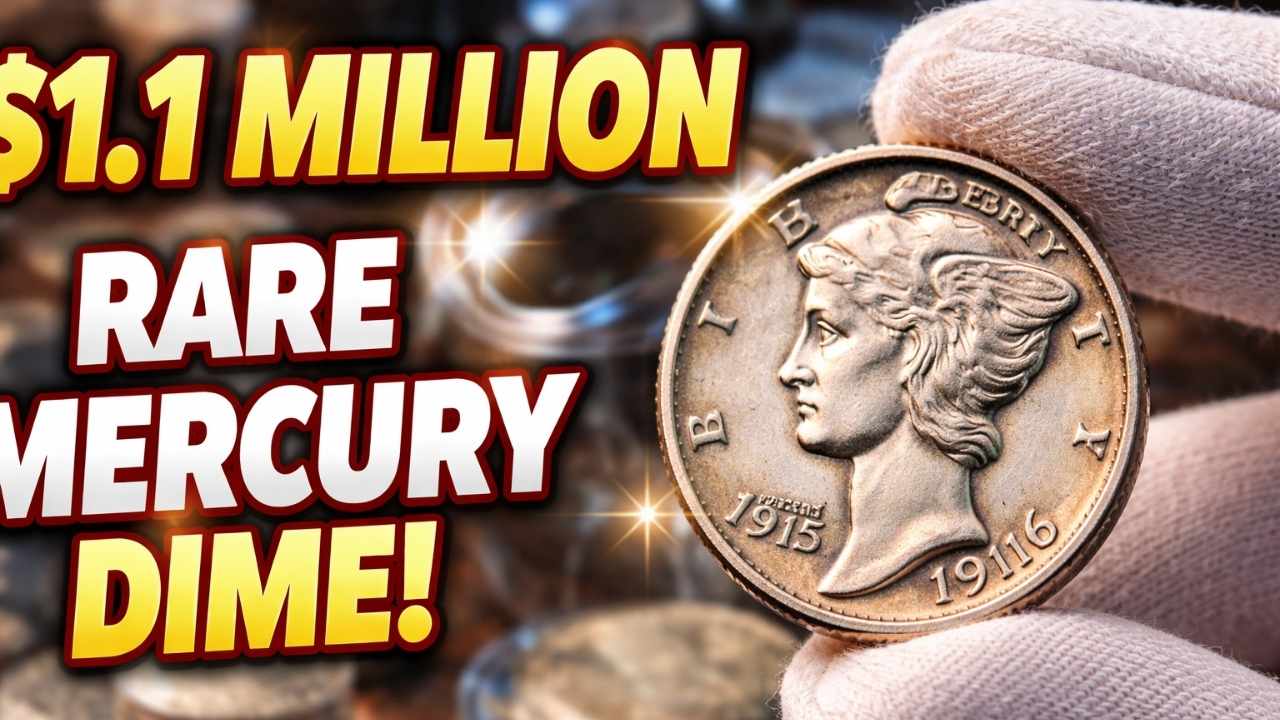
$1.1 Million Rare Mercury Dime: The Mercury Dime, officially known as the Winged Liberty Head dime, is one of the most beloved coins in American numismatics. First minted in 1916, it features a striking design by sculptor Adolph A. Weinman. The obverse depicts Liberty wearing a winged cap, symbolizing freedom of thought, while the reverse shows a fasces and olive branch, representing strength and peace. Over a century later, certain rare Mercury Dimes have achieved legendary status, with one example selling for an astonishing $1.1 million. This article explores the value, rarity, collector demand, and market insights surrounding this 109-year-old coin.
Historical Background
The Mercury Dime was introduced in 1916, replacing the Barber Dime. Its design was part of a broader movement to beautify American coinage in the early twentieth century. The coin was minted until 1945, when it was replaced by the Roosevelt Dime. Over its three decades of production, the Mercury Dime saw numerous mint marks, varieties, and production quirks, some of which have become highly valuable to collectors.

The coin that reached $1.1 million is a rare 1916-D Mercury Dime, struck at the Denver Mint. With a mintage of only 264,000, it is one of the lowest production runs in the series. High-grade examples are exceedingly rare, making them a centerpiece of Mercury Dime collecting.
Collector Demand
Collector demand for Mercury Dimes remains strong due to their beauty, historical significance, and rarity. The 1916-D is considered the key date of the series, and collectors often view it as essential to completing a set. Demand is particularly high for coins in uncirculated condition, as most examples were heavily circulated and show significant wear.

The $1.1 million sale reflects not only the rarity of the coin but also the passion of collectors who are willing to pay extraordinary sums for the finest known specimens. Demand is further fueled by the coin’s iconic design, which continues to captivate numismatists and historians alike.
Market Prices
The value of Mercury Dimes varies widely depending on date, mint mark, and condition. Common dates in circulated condition may be worth only a few dollars, while rare issues in pristine condition can command thousands or even millions. The 1916-D is the most valuable, with prices ranging from several hundred dollars for heavily worn examples to over one million dollars for top-grade specimens.

Other valuable dates include the 1921 and 1921-D, both of which had low mintages. Proof issues from the 1930s and 1940s also command strong premiums. Market prices are influenced by auction results, collector demand, and broader trends in numismatics.
Rarity
Rarity is the driving force behind the value of the Mercury Dime. The 1916-D is rare due to its low mintage and the fact that most examples entered circulation. Finding one in mint state condition is extremely difficult, which is why high-grade specimens are so valuable. The rarity of the coin is compounded by its historical significance as the first year of issue.
Other rare varieties include doubled dies, repunched mint marks, and full band designations on the reverse fasces. Coins with fully struck bands are particularly prized, as they indicate superior quality and detail.
Historical Significance
The Mercury Dime holds deep historical significance as a symbol of America’s ideals during the early twentieth century. Its design reflects freedom, strength, and peace, values that resonated during a time of global conflict and domestic change. The coin also represents the artistry of Adolph A. Weinman, whose designs continue to influence American coinage today.

The 1916-D, in particular, symbolizes the challenges of coin production at smaller mints and the importance of mint marks in numismatics. Its rarity and value highlight the role of chance and circumstance in creating legendary coins.
Collector Insights
Experienced collectors emphasize the importance of condition, certification, and provenance when evaluating Mercury Dimes. Coins graded by professional services such as PCGS or NGC provide assurance of authenticity and quality, which is crucial for investment. Collectors also value coins with strong luster, sharp details, and minimal imperfections.

Another insight is the importance of patience and research. Rare Mercury Dimes may appear unexpectedly at auctions or estate sales, and collectors who stay informed often have the best opportunities to acquire valuable specimens.
Investment Potential
Rare Mercury Dimes offer significant investment potential, particularly the 1916-D and other low-mintage issues. Their scarcity and historical importance ensure that demand remains strong, and prices have consistently risen over time. Investors view these coins as tangible assets with the potential for long-term appreciation.

However, like all collectibles, values can fluctuate based on market trends and economic conditions. Serious investors often focus on acquiring certified high-grade examples to maximize value and minimize risk.
Collecting Tips
For those interested in collecting Mercury Dimes, here are some practical suggestions:
- Learn the history and varieties of the series.
- Focus on key dates such as the 1916-D, 1921, and 1921-D.
- Consider professional grading to ensure authenticity and condition.
- Explore varieties such as full band designations and mint errors.
- Preserve coins in protective holders to maintain quality.
Conclusion
The Mercury Dime is more than just a coin; it is a symbol of American history, artistry, and values. While most examples remain affordable, a select few have achieved legendary status, selling for over one million dollars. The 1916-D Mercury Dime, with its rarity, beauty, and historical significance, stands at the pinnacle of numismatics. For collectors and investors alike, it represents the thrill of discovery, the pride of ownership, and the enduring fascination with America’s coinage heritage.