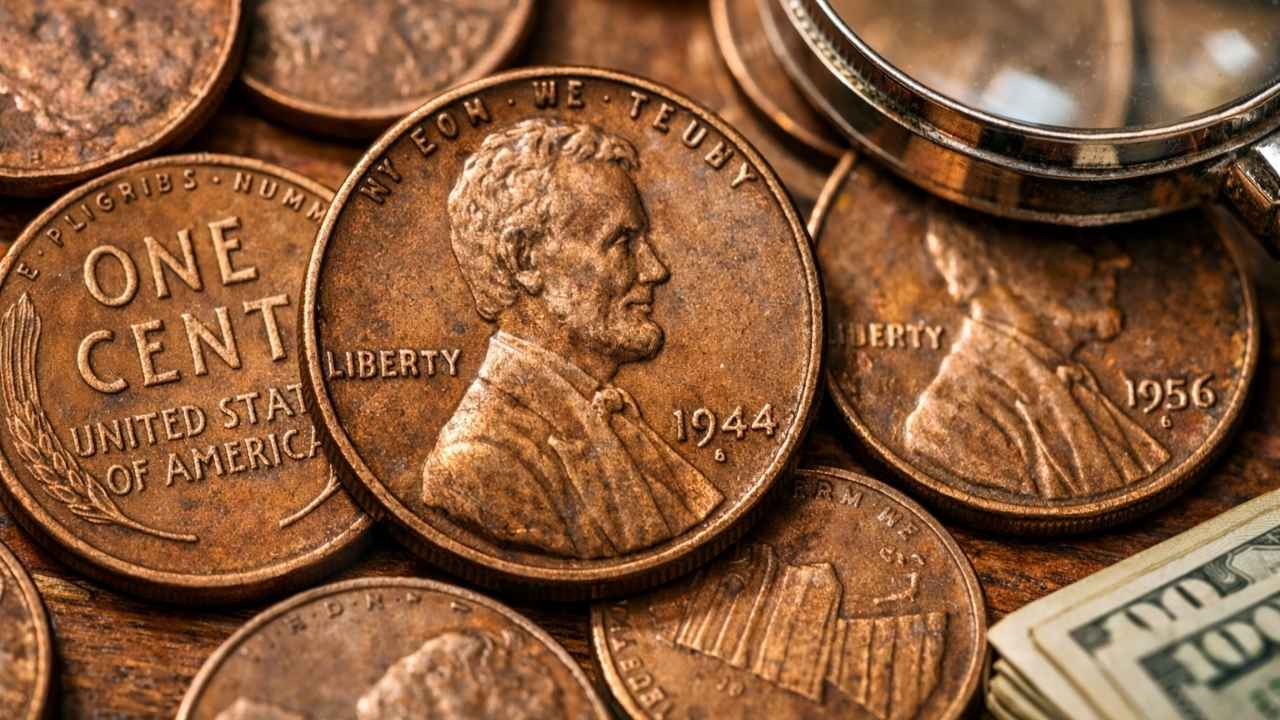
Wheat Penny 2026 Value Guide: The Wheat Penny, officially known as the Lincoln Cent with the wheat ears reverse, was first introduced in 1909 to commemorate the centennial of Abraham Lincoln’s birth. Designed by Victor David Brenner, the coin featured Lincoln’s portrait on the obverse and two stylized wheat stalks on the reverse. It was the first U.S. coin to depict a real person rather than a symbolic figure, marking a turning point in American coinage history. Produced until 1958, the Wheat Penny remains one of the most collected coins in the United States.
Rare Dates That Command High Value
Certain dates and mint marks in the Wheat Penny series are exceptionally rare and valuable. Coins such as the 1909-S VDB, the 1914-D, and the 1922 “No D” variety are legendary among collectors. These coins, when found in pristine condition, can fetch prices well over $100,000. The rarity stems from low mintage numbers, production anomalies, and the difficulty of finding high-grade examples after decades of circulation. Collectors in 2026 continue to pursue these key dates with passion, often competing fiercely at auctions.

Mint Errors and Their Impact
Mint errors add another layer of intrigue to Wheat Pennies. Double die obverses, off-center strikes, and planchet flaws create unique specimens that are highly sought after. The 1955 double die obverse remains one of the most famous error coins in U.S. history, with dramatic doubling visible in the date and lettering. In 2026, error coins continue to attract strong demand, with prices climbing as collectors recognize their rarity and historical significance.
Collector Demand in 2026
By 2026, collector demand for Wheat Pennies remains robust. Enthusiasts value the series for its historical importance, artistic design, and accessibility. While common dates are affordable entry points, rare dates and errors drive the high-end market. Auction houses report strong bidding activity, with record prices achieved for top-graded specimens. Online marketplaces have expanded access, allowing collectors worldwide to participate in the pursuit of these coins. The combination of nostalgia and investment potential ensures that Wheat Pennies remain a cornerstone of numismatics.

Prices Over $100,000
The most valuable Wheat Pennies consistently achieve prices over $100,000 at auction. Coins such as the 1909-S VDB in MS-67 condition or the 1914-D in pristine grades are considered treasures. Error coins like the 1955 double die obverse also command six-figure prices when preserved in exceptional condition. These values reflect not only rarity but also the intense competition among collectors who recognize the historical and financial significance of these coins.
Market Trends in 2026
The numismatic market in 2026 shows steady appreciation for rare Wheat Pennies. Analysts note that while common dates remain stable in value, rare specimens continue to climb. The $100,000 threshold has become a benchmark for elite coins in the series, with prices often exceeding expectations at auction. Market trends suggest that demand will remain strong, driven by both seasoned collectors and new investors seeking tangible assets with historical resonance.

Investment Strategies for Collectors
Collectors and investors in 2026 employ several strategies to maximize the value of their Wheat Penny holdings:
- Focus on acquiring key dates in the highest possible grades.
- Seek out error coins, which often appreciate faster than standard issues.
- Preserve coins in certified slabs to maintain condition and enhance marketability.
- Monitor auction results to identify emerging trends and benchmark values.
By combining historical knowledge with market awareness, collectors can build portfolios that balance passion with financial growth.

Cultural Significance of the Wheat Penny
Beyond its monetary value, the Wheat Penny carries cultural significance. It symbolizes a nation’s respect for Abraham Lincoln and reflects the artistry of early 20th-century coinage. For many collectors, owning a Wheat Penny is not just about investment but about preserving a piece of American history. In 2026, this cultural resonance continues to enhance its appeal, ensuring that the coin remains relevant in both numismatic and historical contexts.
Conclusion
The Wheat Penny Value Guide for 2026 highlights a series that is both historically significant and financially rewarding. With rare dates, mint errors, and prices exceeding $100,000, the coin offers opportunities for collectors and investors alike. Its cultural significance adds depth to its financial appeal, making it a unique and enduring part of American coinage. For enthusiasts, the Wheat Penny represents not just a piece of currency but a bridge between history, artistry, and investment potential.